By
C.S. Elston
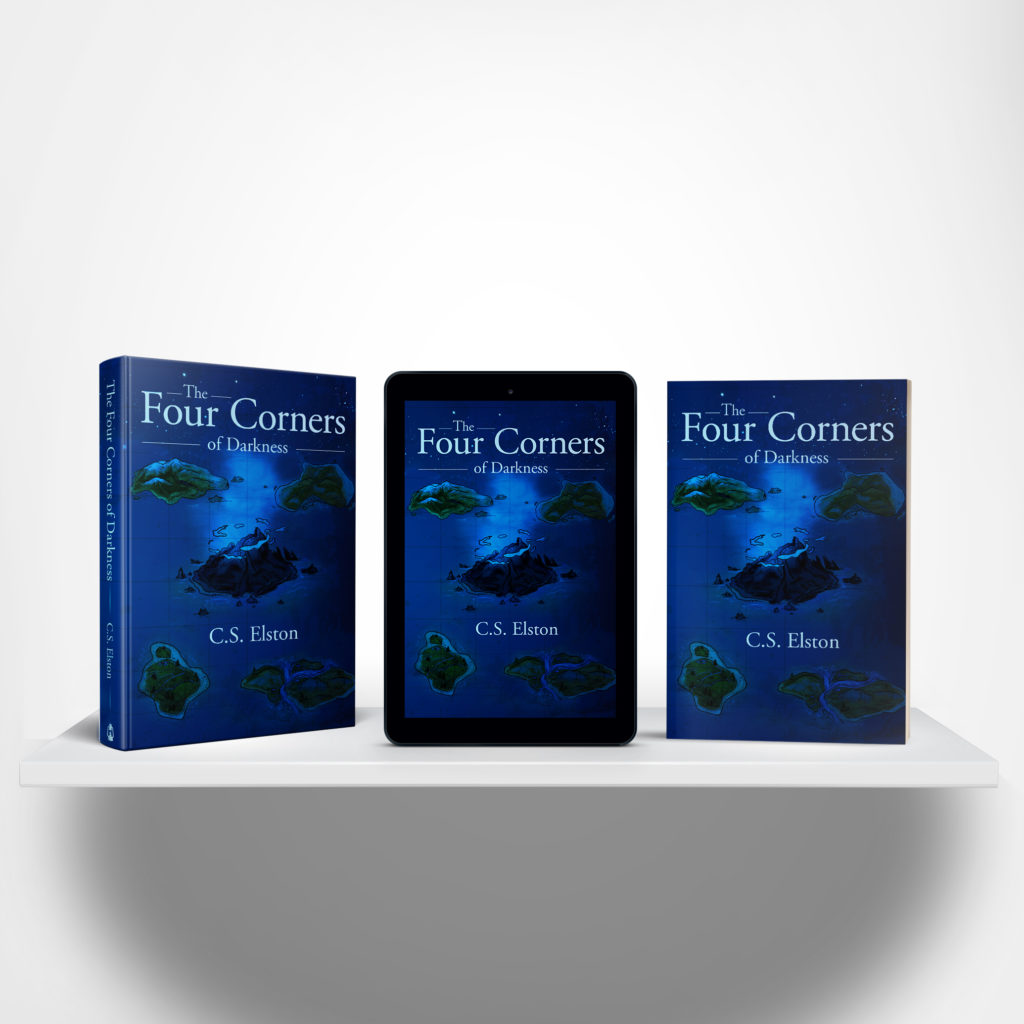
Admittedly, I’ve told this story before. But it answers a question I get asked a lot and, with the recent release of “The Four Corners of Darkness,” I thought it would be appropriate to, once again, share the inspiration behind the series.
I was driving down the 101 freeway just north of Los Angeles, California, somewhere between Studio City and Sherman Oaks about fifteen or sixteen years ago. Looking out the side window of my Jeep Wrangler as I passed by a sea of houses and apartment complexes, I don’t know why I was thinking about this but, all of the unhappy home environments that exist all around us entered my mind. I thought about the fact that a lot of people who feel unloved, really are in fact loved. They are just in an environment where the people who love them either don’t know how to say it or show it, or they’re too wrapped up in their own problems to recognize the ones they’re causing in the lives of the people they love by simply not expressing the love they really do have deep down. Sometimes, we just overcrowd that love with so much self-created, negative clutter, that no one can see it because it’s like a wonderful gift hidden in the back of the closet where no one will ever have the opportunity to enjoy it.
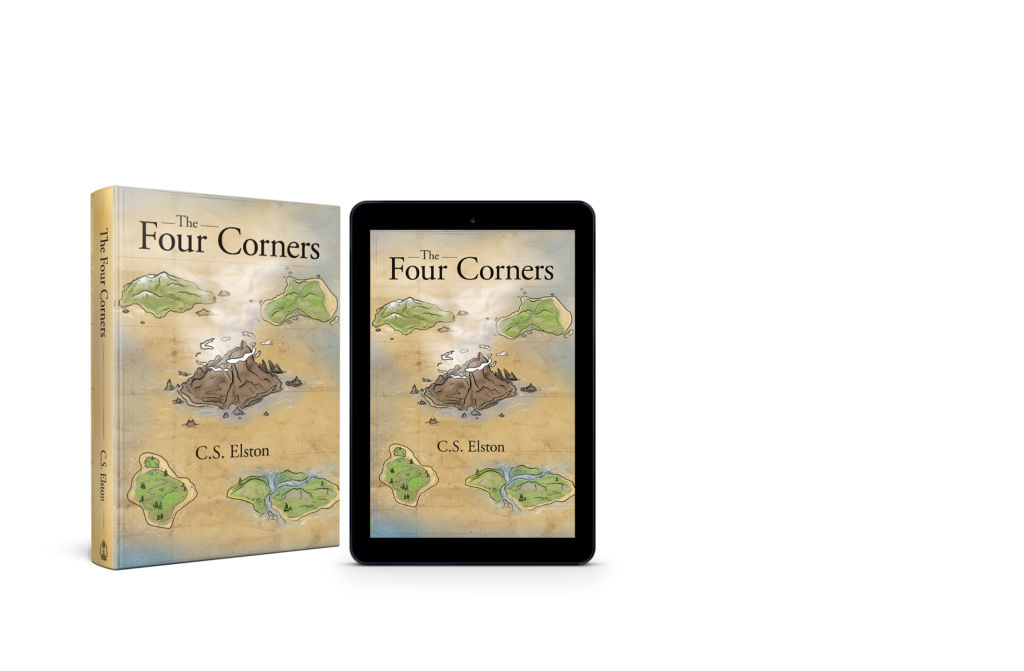
That got me thinking about how quickly someone’s attitude could change if they were faced with losing the person or people they love. Somehow, that translated into this fantasy world called Kadosh, which is a Hebrew word that means “set apart for a Holy purpose.” In the books, people are being yanked out of the real world and separated onto islands, presumably, for eternity. So, while God intends for these people to love one another, the fact that they are not doing that in the real world gives the demon ruler of this fantasy world the ability to pull them into his realm where he can keep them apart from one another.
Absence truly does make the heart grow fonder. And, in an extreme situation like that, the aforementioned gift is going to find itself through the clutter in a hurry. Then what do you do? When love and regret overwhelm you like that, you can’t keep it inside. You must let the people you have those feelings for know about it. In the case of the Snyder family in “The Four Corners,” that means an incredible journey lies ahead. Ultimately, the risk is worth the potential reward.

The sequel, “The Four Corners of Darkness” is inspired, at least in part, by a one-act play I acted in while attending college at George Fox University in Newberg, Oregon. I think it was called “Doors” but, I can’t remember for sure and, I have no idea who wrote it. But the play was about a bunch of people who seemed permanently trapped in a house. The doors were locked and couldn’t be opened, and the windows had bars on them. It was an allegory about sin and salvation. Ultimately, someone from the outside, who had been there before and been shown the way out, had to go back inside and pay it forward. In the same way, while the Snyders and a bunch of others find their way back home at the end of the first book, their youngest child, Kinsey, recognized the responsibility that came with that accomplishment. He knew they would have to go back and show those who didn’t take the journey with them the first time, that there is, indeed, a way to get out and go back home. Now that the second book is out, I guess I’d better get to work wrapping this story up with the final installment of “The Four Corners” trilogy. . .

 As a Christian, my absolute highest priority is actually trying to please God. And, if I’m being two-faced, I’m failing in that primary goal. Two-faced people are not authentic people and God demands authenticity. After all, authenticity is truth and Jesus told us that the truth shall set us free. If pleasing my God is my top priority, I must be striving to please Him in every conversation I have. Therefore, I can’t be one person with my church friends and another with my school or work friends. I have to remain that God-pleasing person in every public situation, as well is in private. My inner person must match up with my outer person, always. That’s authenticity.
 As a writer, trying to please everyone is the kiss of death. Different people like different things. Therefore, I write things that I would enjoy reading. When I do, I accept that some people will also enjoy the things that I do. I also accept that some people will not. That’s okay. Unfortunately, I even have to accept the fact that there will be people who actually hate what I do. That can be tough to swallow but, when it comes right down to it, it’s natural and, therefore, it’s okay, too. After all, if I write a piece about Jesus being the Son of God, I can’t expect an atheist to appreciate it. And, if I write something to try and get everyone to love it, chances are very few people are even going to like it. I’ll take 100 five-star reviews and 100 one-star reviews over two hundred three-star reviews because I know 100 people are going to want to read what I write next.











 Self-criticizing can be very detrimental. It can stifle creativity. It can cause you to doubt your abilities and the work you’re doing to the point where it slows you down or even leaves you completely unproductive. It can cause image issues, relationship fears, and often leads to full-blown depression.
 As a Christian, I also believe that the voice within me can be the Holy Spirit shining a light on dark spots in my life that need to be exposed so that I can improve. So that I can become the man I was created to be and live the life I was created to live. That’s a voice I want to listen to because it makes me a better person and, ultimately, a happier one.

 The inspiration for
  The main takeaway is the simple fact that there is no way to know when or where the inspiration for a great new story is going to strike. But, when it does, it’s unavoidable. It’s also awesome. You wouldn’t want to avoid it if you could. That’s why it’s always smart to keep a notebook handy. Or, a voice recording app on your smartphone. Whatever works best. Just don’t miss the opportunity to grab a great idea while it’s there because they can be as fleeting as the memory of a great dream.
 Sometimes, you just need to clear your head. This can mean temporarily moving on to another project, whether the project be something else you’re writing or pulling some weeds in the garden. The bottom line is that a writer needs to let the process run its course without letting difficulty become an excuse for laziness. As I said in the writer’s block post, “Do whatever it takes: A walk in the woods, a lengthy prayer, some journaling at the beach, or, maybe you need the inspiration that another artist can provide – a song with a similar feeling to the one you’re trying to write about.” Even another book, a movie (could be just a scene) or a TV show that you know hits you with the same type of emotion that you’re trying to convey. I’m not suggesting plagiarism. Far from it. Don’t copy. Just use that other piece of work to get you where you need to be mentally and emotionally so that you can do your own work and convey the story and the message that you set out to from the first moment where you were originally inspired to write whatever it is you’re writing.

 Don’t get me wrong, some pages a lot easier than others. But, if you grind it out, you always get through the tough ones. Sometimes, it is even necessary to walk away. I’ll often go workout or take a shower so that I can think about what’s slowing me down. Most of the time, I have it figured out by the time I’m back in front of the laptop. It just takes some mental wrestling. Typically, that fight makes it all better anyway.
 I happen to be naturally self-disciplined. So, I need to give myself freedom. It’s far more helpful than boxing myself in would be. But, that’s not true for everyone. I know a lot of writers that demand 10 pages a day from themselves. I can’t do that. Today, 20 pages might pour out of me and tomorrow it could be an excruciating exercise in self-torture to crank out 5. I think that’s okay. The pace for writing each chapter or scene is bound to be different.

